Sixty-nine percent of S&P 500 companies now point to a live AI deployment, yet only twenty-nine percent can put a number on a result1. These figures, highlighted in a recent economic analysis of second-quarter 2026 earnings, describe an adoption boom with little P&L benefit to show for it. The report also argues that the process reengineering and data governance that AI requires could delay productivity gains well beyond market expectations. For a sponsor or a portfolio company, waiting is not an option.
Companies commit to AI to strengthen the business, but their underlying processes stay the same: the rework, the exceptions, the three versions of one workflow left behind by the last add-on. All of it gets automated. Work moves faster and maintenance costs rise, but the EBITDA benefit never arrives. This is a process problem, and one we were built to solve.
Three decades of process discipline, rebuilt for AI
SSA & Co. (Six Sigma Academy) was built to improve financial and operating performance through process improvement. We were using big data before it had a name, identified root cause and next level effect at the core, and drove change across organizations. Ours is one of the most revered business management systems of our time. Today, we harness that legacy and leverage AI as an accelerant.
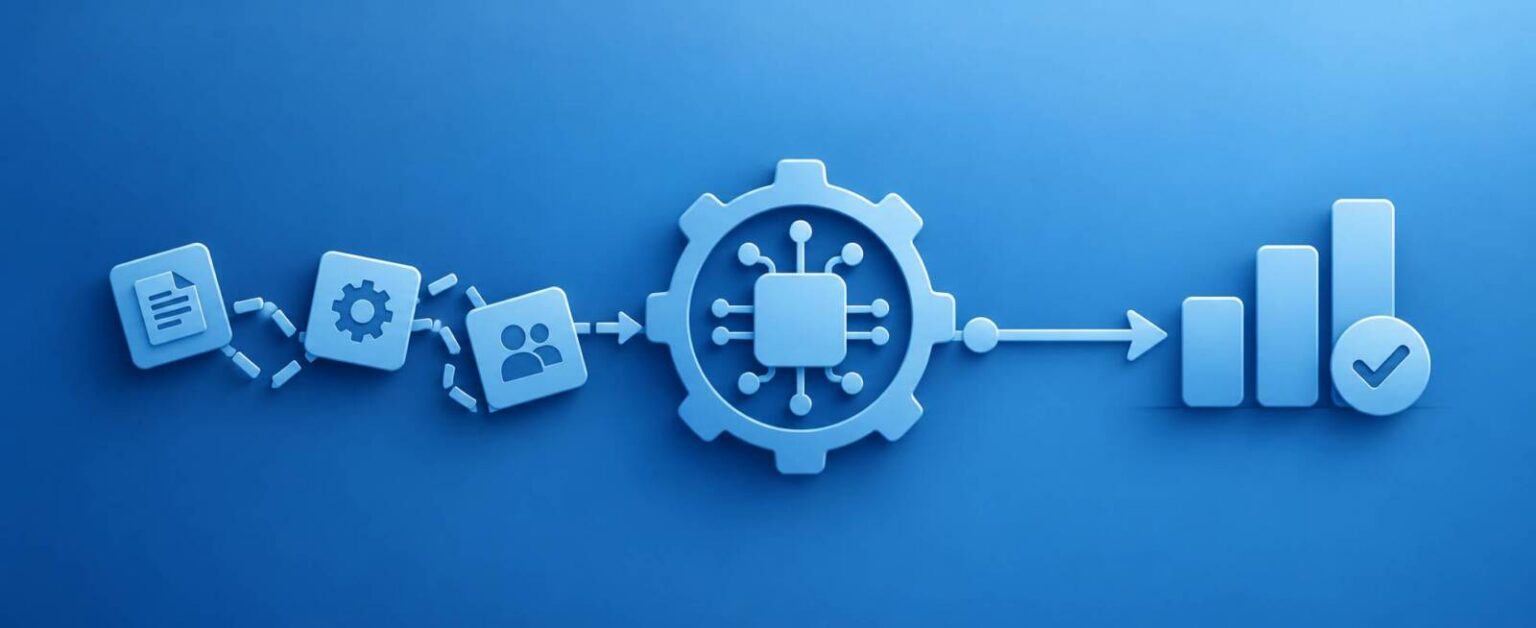
Digitally Enabled Process Improvement℠ combines Lean Six Sigma rigor, data science, and change management with AI. Senior practitioners turn data into insight and automate where it drives real value. We reengineer before we automate: eliminate what should not exist, standardize what remains, optimize it, and only then apply AI where it drives the most value. We accelerate operating and financial performance – we take you 2x as FAR, 2x as FAST.
Start with the data the business already has
Most diagnostics open with a data request that drains momentum before the analysis begins. Our approach begins with readily available data, because AI lets us use nearly all of it: ERP and financial records, system and workflow logs, contracts, meeting transcripts, call recordings, even sensor and telemetry data. We work from the full population of recorded transactions rather than a sample, so the baseline shows how work actually moves, including the delays, loops, and workarounds that never make it onto a process map.
Our AI toolkit accelerates data ingestion, process mining, and opportunity identification. Our library of tools includes the FlowScope process miner and digital analysts to accelerate data ingestion and process analysis, supported by a complex program management agent, Control Tower℠, and intelligence agents to identify opportunities and potential solutions. SSA & Co. practitioners leverage these tools to bring the judgment that turns findings into results, testing each one against how the business makes money and deciding what to prioritize.
Each engagement adds to a shared project knowledge base, carrying benchmarks and lessons into the next one. For a sponsor, the benefits compound: apply the approach well once, and it becomes faster and more precise with each portfolio company that follows.
Value early, and gains that stick
Every engagement opens with a quantified EBITDA opportunity agreed to with leadership, and the team goes after the biggest sources of value first. Quick wins come out of the design work and start landing while the program is still running, often through rapid prototyping. Results show up in weeks, not at the end of a multi-year roadmap.
Results are sustained long after the project team is gone and attention has shifted. We coach teams through the build instead of handing over a recommendation, because adoption, not design, is what makes improvement stick. We leave behind the standard work, the operating cadence, and the tracking that ensure the new process endures. Often that includes our Control Tower℠, which gives leadership line of sight to every benefit and surfaces risk before it turns into a problem. For a sponsor, that durability is what moves a gain from the value creation plan into EBITDA the next buyer will pay for.
What it has delivered
Pricing: A PE-owned services carve-out was leaving negotiated price increases uncollected. A multimodal LLM reviewed the renewal contracts and found 60% had unapplied escalators. We corrected the underlying renewal pricing process, then built a way to track every approved increase through billing. The result was a 7% average fee increase across more than 150 contracts and a 10% EBITDA gain within six months.
Operations: A PE-owned equipment manufacturer was losing margin to outbound freight. We traced the utilization loss to the planning process and tools. The data and logic to optimize loads already existed. So instead of a multi-year TMS overhaul, we leveraged AI to develop a single connected load planning tool, piloted in one plant within six weeks and live across all facilities within eight. Freight spend fell 12%, utilization rose from 65% to 80%, and the load lock window shrank from 21 days to 3.
Service: A PE-owned education publisher was paying above-market IT service costs and weighing whether to renew a key outsourcing contract. Process mining of its ServiceNow data found that the partner only performed work the internal team could handle, and that the partner’s queue bottlenecks were stalling service desk tickets. We brought the outsourced work back in-house and redesigned how tickets were routed. Costs to resolve fell 30%, and issues were resolved 40% faster.
The bottom line
Committing to AI as a way to strengthen the business is the right call. Turning that commitment into EBITDA a buyer will underwrite requires transforming how work gets done. That has always been our focus. Lean Six Sigma gave us discipline. AI gives you speed. Together they take businesses 2X as FAR, 2X as FAST.
1. Torsten Slok, “From Who Is Deploying AI to Who Can Prove the ROI,” Apollo Daily Spark, Apollo Global Management, September 2026.